Monday, September 12, 2011

Do You Think I'll Make a Soldier?

During the Civil War, close to 180,000 African-American men, both free and former slaves, served in the United States Army.  That does not include the tens of thousands of freedmen who worked as laborers and servants to the U.S. military during the war.  Some of their stories have been told, as in the film Glory about the Massachusetts 54th Volunteers, many of whom died in the assault on Fort Wagner in 1863.  In my novel, The Rebel Wife, Simon comments that he was in the 12th U.S. Colored Infantry at the Battle of Nashville.  This piece of history is fascinating and little told.  Below are some of the details I was able to piece together about the raising and fighting of these troops.


The arming of black Americans in the Civil War was a hotly debated topic, both North and South.  In 1864 as Sherman was pushing his way to Atlanta, Confederate Major General Patrick Cleburne advocated the enlistment of slaves, who would then be granted freedom, to fight for the Confederacy.  The war was almost over before Jefferson Davis would pursue this as a policy.  In the North, however, there were individuals who were raising and arming African-Americans well before Lincoln was ready to enact it as military policy.   Frederick Douglass was a fierce advocate of allowing blacks to enlist, saying “Who would be free themselves must strike the first blow.”

In April of 1862, Major General David Hunter was secretly organizing black men on the South Carolina sea islands into troops that would ultimately become the First South Carolina Regiment.  These troops would serve under Thomas Wentworth Higginson, who left a vivid account of his experiences in the book Army Life in a Black Regiment, including a fascinating section on the songs the former slaves would sing.  General Benjamin Butler was organizing black troops in New Orleans about the same time.  In Kansas, James E. Lane was enlisting black troops by the fall of 1862.

Recruiting broadside for heavy artillery, paid meaningfully more than the average black infantryman

But official policy had to catch up with most of them.  By 1862, Lincoln and his advisors agreed that an active enlistment policy for black troops was important.  On July 17, 1862, Congress authorized the president to raise black troops “for any military or naval service for which they may be found competent.”  Lincoln waited for the Union victory of Antietam in September 1862 before announcing his policy, which became a part of the Emancipation Proclamation.  The policy would be effective as of January 1, 1863.

Secretary of War Stanton, who had secretly sent Union uniforms for David Hunter’s troops in South Carolina, began to authorize Northern state governors to raise black troops.  Governor John A. Andrew in Massachusetts was the first to be given this authority and the 54th and 55th Massachusetts was the result.  New Bedford, an important whaling port with a large free black and abolitionist population, was a major source of the recruitment effort, but ultimately there was not enough of a population to complete the regiments.  Philadelphia became a focal point for raising volunteers, in spite of popular sentiment against it.  The capture of Chambersburg, Pennsylvania by Confederate cavalry in mid-June 1863 helped give a push to acceptance and recruitment efforts.

Recruiting broadside that emphasizes the protection of black troops who were not typically treated as prisoners of war by the Confederates.  The sheet states that one Confederate prisoner will be killed for every black Union soldier killed.

In the North, there was still widespread antipathy to black troops and riots and violence ensued in many cities.  Where recruitment in the North was most successful, it seemed to be affiliated with a strong abolitionist community, like around Oberlin College in Ohio, which was an important support for the raising of the 5th U.S. Colored Troops.  The recruiting speeches urged political equality through service.  In other places, a strong Union League presence could be the impetus for raising troops, like in Philadelphia in June 1863 when the 6th U.S. Colored Infantry was raised, or in New York.  In the South amidst a large slave population, the situation would be very different.

Black infantry garrisoned at Fort Negley in Nashville during the Civil War

On May 23, 1863, the Bureau of Colored Troops was created with Major General Lorenzo Thomas in charge.  Another important recruiter was George L. Stearns, a Massachusetts abolitionist and former confidante of John Brown.  Stearns was sent to Nashville in September 1863 and began actively recruiting in that Union-held city, where he signed up 300 African-Americans in one day.  The black population of Nashville was organized and on October 20, 1863, a large meeting was held where black community leaders exhorted the freedmen of Nashville to fight:
Then let every able bodied descendant of Africa rally to arms, for arms alone will achieve our rights.  God will rule over our destinies.  He will guide us, for He is the friend of the oppressed and downtrodden…Slavery can never be what it has been, but let us not sit supinely by, but rather take a share in the great events transpiring.  Let us make a name for ourselves and race, bright as the noonday sun.
Band of the 107th U.S. Colored Infantry at Fort Corcoran
Outside of Southern cities held by the Union, recruitment was a different affair.  Near Union encampments, there also grew large camps of “contraband”, General Butler’s original term to refer to runaway slaves joining the Union for protection and freedom.  Many of the former slaves who gathered around Union camps ended up laboring for the army, digging fortifications or serving as servants, usually (for a man) at about $7 per month (the same rate black soldiers were ultimately paid in the war, less than their white counterparts).

Company E, 4th U.S. Colored Infantry, at Fort Lincoln
As an example, General Lorenzo Thomas ordered General S.A. Hurlburt, who was commanding the district of Western Tennessee in mid-1863, to raise six regiments of colored troops (a regiment was normally ten companies of 100 men each, or 1,000 men).  Hurlburt then commanded each head of a division of his brigade to raise one regiment.  These division commanders then appointed captains for each regiment (officers of black regiments were typically white, while musicians, privates and some non-commissioned officers were black).  The captains recruited themselves from the camps and vicinity—and they also relied on professional recruiting agents to help fill out their regiments.  For the regiment being raised by Captian Edward Bouton, he and his recruiting agents covered the area looking for recruits and took about six weeks before the regiment was raised.  This group of regiments was mustered into service on June 27th, 1863 as the First West Tennessee Infantry of African Descent.  The 1st West Tennessee ultimately combined with the 1st Alabama Infantry of African Descent and was redubbed the 59th U.S. Colored Infantry.

Field and staff officers (all white) of the 39th U.S. Colored Infantry at Petersburg, Virginia
Thomas J. Morgan was the colonel of the 14th U.S. Colored Infantry and commanded a brigade of four colored regiments at the Batlle of Nashville.  He was ordered to organize a regiment in November 1863 and wrote this of the experience:
By order of Major Stearns, I went to Gallatin, Tennessee, to organize the 14th United States Colored Infantry…There were at that time several hundred negro men in camp, in charge of, I think, a lieutenant.  They were a motley crowd—old, young, middle-aged.  Some wore the United States uniform, but most of them had on the clothes in which they had left the plantations, or had worn during periods of hard service as laborers in the army...We had no tents, and the men were sheltered in an old filthy tobacco warehouse, where they fiddled, danced, sang, swore or prayed, according to their mood…One by one the recruits came before us à la Eden, sans the fig leaves, and were subjected to a careful medical examination, those who were in any way physically disqualified being rejected.  Many bore the wounds and bruises of the slave-driver’s lash, and many were unfit for duty by reason of some form of disease to which human flesh is heir.  In the course of a few weeks, however, we had a thousand able-bodied, stalwart men…They proved very efficient, and had the war continued two years longer, many of them would have been competent as commissioned officers.
One recruiting agent with a remarkable record of success was Augustus L. Chetlain, Brigadier General of Volunteers.  He kept offices for recruiting black troops in Knoxville, Chattanooga, Nashville, Corinth, Mississippi, and Columbus, Kentucky.  He inspected troops in places as various as Paducah, Kentucky, Nashville, Knoxville, Johnsonville, and Athens, Alabama.  He organized a total of 18 regiments of infantry, three of heavy artillery of 1,700 men each, and one battery of light artillery.

"Marching on!"  The Fifty-fifth Massachusetts Colored Regiment singing John Brown's March in streets of Charleston, February 21, 1865

Another recruiting agent was the elderly former clergyman James M. Ayres.  In his diary on May 4, 1864, when stopping over in Huntsville, Alabama to recruit, he wrote the following about his work:
Sometimes it had been attended with great danger and Risk.  And many unpleasant things has occurred.  I have stood almost as A lone tree where A forest once was, forsaken by all the South, and while my Brother Soaldiers and officers would occasionally meet a smile from Southern faces, in Shape of Southern Women, My Lot was Sneers and Curses.  ‘Ther goes that oald nigger Recrueter, that’s that oald man was at our House the other day and took pops or dads Niggers Away.’ And Oh such Eyes and Daggers I got.
Taylor, a drummer boy with the 78th Regiment U.S. Colored Infantry
The men of the 12th U.S. Colored Infantry, the regiment to which the character Simon in The Rebel Wife belonged, were organized at an army encampment by the Elk River Bridge crossing of the Nashville and Chattanooga Railroad.  This road went from Chattanooga south-westerly to Stevenson, Alabama and then swung up to Nashville after crossing the Tennessee.  The bridge crossing would likely have been in between the current towns of Winchester and Tullahoma, Tennessee, not far from the Alabama state line.

Check back later for a post giving more detail about the service of Colored Infantry regiments and their role in the Battle of Nashville.  There were eight regiments of African-American troops in the Army of the Cumberland who all did important service in the battle.

Sources:
Thanks as always to the amazing Providence Athenaeum as well as the resource rich libraries of Providence at Brown University, the Rhode Island School of Design and the Providence Public Library.
  Berlin, Ira, ed.  FREEDOM, A documentary history of emancipation, 1861-1867.  New York:  Cambridge University Press, 1991.
  Cornish, Dudley Taylor.  The Sable Arm:  Black Troops in the Union Army, 1861-1865.  New York:  W.W. Norton & Company, 1966.
  Cowden, Colonel Robert.  A Brief Sketch of the Fifty-Ninth Regiment of United States Colored Infantry.  Dayton, Ohio:  United Brethren Publishing House, 1883.
  Glatthaar, Joseph T.  Forged in Battle:  The Civil War Alliance of Black Soldiers and White Officers.  Baton Rouge:  Louisiana State University Press, 2000.
  Lardas, Mark.  African American Soldier in the Civil War, USCT 1862-66.  Warrior/Osprey, 2006.
  Mays, Joe H.  Black Americans and Their Contributions Toward Union Victory in the American Civil War, 1861-1865.  New York:  University Press of America, 1984.
  McPherson, James.  The Negro’s Civil War:  How American Negroes Felt and Acted During the War for the Union.  New York:  Pantheon Books, 1965.
  Paradis, James M.  Strike the Blow for Freedom:  The 6th United States Colored Infantry in the Civil War.  Shippensburg, Pennsylvania:  White Mane Books, 1998.
  Quarles, Benjamin.  The Negro in the Civil War.  Boston:  Little, Brown and Company, 1953.
  Trudeau, Noah Andre.  Like Men of War:  Black Troops in the Civil War 1862-1865.  New York:  Little, Brown & Company, 2002.
  Washington, Versalle F.  Eagles on Their Buttons:  A Black Infantry Regiment in the Civil War.  Columbia, Missouri:  University of Missouri Press, 1999.
  Williams, George Washington.  A History of the Negro Troops in the War of the Rebellion 1861-1865.  New York:  Harper & Brothers, 1888.
  Wilson, Keith, ed.  Honor in Command:  Lt. Freeman S. Bowley’s Civil War Service in the 30th United States Colored Infantry.  Gainesville, Florida:  University Press of Florida, 2006.


Wednesday, September 7, 2011

Triple Time by Anne Sanow

What a great pleasure to discover that someone is as beautiful on the inside as they are on the outside.  Anne Sanow, former fellow of the Fine Arts Work Center and winner of the 2009 Drue Heinz Literature Prize, has written a beautiful and moving book and I recommend it to everyone.


Triple Time is a collection of linked short stories about the lives of expatriate Americans in Saudi Arabia spanning World War II to the present.


Kimberly appears several times, as a young girl with a father working as a construction contractor; later as a young American woman testing the limits of Saudi law, constrained by the highly restrictive and yet radically modernizing Arab society; and finally as a woman who has entered into a traditional Saudi polygamist relationship that is for her also a revolutionary rejection of her culture and roots.  With the most beautifully tender prose, Sanow captures the confusion and contradictions of Americans in a land that is strange to them.  For an American reader, the questions seem to bounce off each other.  Who is more different, more strange?  The nomadic Arabs adopting the most modern of Western conventions, or Westerners who arrive in this modernizing place that is still bound up in layers of tradition?

What a beautiful book from a beautiful writer, inside and out.

Monday, August 29, 2011

Dog in a Bag

Who can resist cute dogs and pretty girls?  Especially when they are together!!  Thanks to my young Clovis and to the smart and beautiful Eyrna.  Clovis looks so cute in that handbag I am going to have to get one for myself--I mean for him!


Thursday, August 18, 2011

Quotes from The Wizard of Lies

I read Diana Henriques' amazing book that covered Bernie Madoff and his Ponzi scheme.  She is a great writer and the book was fascinating.  As I went through, I marked passages that resonated with me.  This is neither scientific nor thematic, simply some quotes, but I thought they might be interesting to some and encourage people to read the whole book.  It is an amazing story.  The quotes are chosen in some cases for the substance of what she writes and in others for the wicked tone that she so skillfully employs.  So here they are:
Page xxiv:  Madoff's construction of the biggest Ponzi scheme in history was enabled by the Wall Street he had helped to build.  He played a prominent role in shaping the modern market, from computerized NASDAQ trading to the mystique of hedge funds to the proliferation of specious derivatives.  He spotted the trends, saw the opportunities, helped write the rule book, and abetted the weaknesses that we all live with, even now.  And he was a creature of the world he helped create, a world that was greedy for riskless gain, impatient with regulation, arrogantly certain of success, woefully deluded about what could go wrong, and selfishly indifferent to the damage done to others.  [Italics mine]
Page 55:  Frank Avellino had the curious habit of referring to himself in conversation in the third person, by his full name.  Asked in subsequent testimony about any bank loans the partnership had obtained, Avellino said, "All I could say to you is, at one point in time, Michael Bienes and Frank Avellino borrowed millions of dollars from Chemical Bank, unsecured, period...We voluntarily turned in our loan to the bank.  They hated us for it."
Page 155:  Despite the clarity of the warning, people on the [SEC] team would later recall that they never truly thought it was credible that a man like Bernie Madoff could be a criminal--he simply didn't fit their ill-informed image of the "typical" Ponzi scheme artist.
Page 156:  For a quant, the human equation is often the most difficult to solve.
Page 163:  By then, after so many years of caution and bureaucratic inertia at the SEC, that lie apparently was simply too large to fit into the agency's limited imagination.

When the SEC tried to raise the "accredited investor" minimum net worth from $1 million to $2.5 million in December 2006:
Page 172:  By doing so, however, [the SEC] walked into a buzz saw of opposition from people who were already invested in hedge funds but would not qualify under the new standard.  As one Congressional Research Service report observed, "These investors did not wish to be protected from risks that the SEC might view as excessive."  The effort was shelved.
Page 175:  But these and other Madoff-linked derivatives--which would soon be offered by HSBC, Citibank, Fortis, Merrill Lynch, and several other global institutions--were also a significant milepost in the evolution of Madoff's Ponzi scheme.  Initially, people had invested with Madoff because they trusted him.  In time, they invested because they trusted whichever prominent accountant, lawyer, or pension fund adviser opened the door to Madoff.  Then they invested with prominent individual investors who knew Madoff, such as J. Ezra Merkin and Sonja Kohn, or in feeder funds such as Fairfield Greenwich and Tremont Partners, whose founders knew him.  Now people who had never heard of Bernie Madoff were tying their fate to his because they trusted the giant banks that were selling these complicated contracts, banks whose chief executives probably had never heard of Madoff either.
Page 176:  If Madoff had guessed wrong about where investors were in their perpetual journey between fear and greed, the move could have been disastrous...
Page 296:  True, [Madoff] paid relatively modest returns--roughly equal to an S&P 500 index mutual fund--but his results were far less volatile and, hence, much safer than an index fund.  How was that possible?  If he was a lot safer than an index fund, shouldn't his returns have been a lot lower?
Page 297:  So they substituted trust and gut instincts for the fine print and legalese that regulators expected them to study.  Some trusted Vanguard and Citibank, and others trusted Madoff--but it was a leap of faith for everybody.  That should have worried everyone much more than it apparently did.
Quoting Madoff talking about how he and his wife, Ruth, got through his house-arrest prior to conviction:
Page 338:  "Ruth held herself together--and I tried to hold myself together for her."  That is what they do, apparently.
Page 340:  Such is the Ponzi scheme.  It is the crime of the egotist, not the sadist.  One need not enjoy others' pain to run a Ponzi scheme.  Until the final moments, there is no pain.  One is helping, not hurting.  That delusion, based on a lie, is reinforced every day by every thankful customer who says, "Bless you, Bernie!"
Page 341:  Regulators, even very good ones, are from Mars; investors, even very rich ones, are from Venus.
Page 342:  Regulators believe in the fine print.  Investors never, ever read the fine print--never.
Page 343:  And as Bernie Madoff learned, once trust is earned, it will protect a con man from every red flag.  After all, "con man" is short for "confidence man," someone who inspires enough confidence to blind his victims to his crime.
and later
Fines are just money--Wall Street makes money like clouds make rain.


Tuesday, August 16, 2011

A Brief and Pleasant Sleep...

Embalming has a role in my novel, The Rebel Wife, so I spent some time tracking down the details of the practice and its acceptance in late 19th century America.  It's a fascinating story.  Here are some details.

Dr. Bunnell's Embalming Practice outside Fredericksburg, VA.  "Free from Odor," he advertises.
Modern embalming techniques were first developed in Europe in the early 19th century.  The Napoleonic invasion of Egypt may have had some impetus, since many of these writers were fascinated by the embalmed dead discovered there from thousands of years before, but the technological advances in chemistry and medicine were likely the more important propellants.  A French chemist, Jean-Nicolas Gannal (1791-1852), wrote a treatise in 1838 discussing both his speculation as to how ancient Egyptians embalmed the dead and his more recent experiments for preserving corpses.  His methods and the purpose of his research were primarily for the preservation of corpses or body parts for dissection and teaching at medical schools, but they were quickly used for funeral practices as well.  His book included instructions for intravenous embalming and “recipes” for solutions that were effective preservatives.  (Yes, very unpleasant.) 

Dr. Richard Harlan (1796-1843)
Philadelphia physician and teacher, Dr. Richard Harlan (1796-1843) learned of the method and Gannal's book on a trip to Paris and translated a copy for an American audience in 1840.  Long title, as one did in the 19th century:  History of Embalming, and of Preparations in Anatomy, Pathology, and Natural History; Including An Account of a New Process for Embalming.  You can see the book here.  This became something of a guidebook for those interested in the preservation of the dead.  Embalming’s early proponents touted it as a way to ensure that the recipient would not risk being buried alive, apparently a serious concern in the 19th century.

[SKIP THIS PARAGRAPH IF YOU ARE FAINT OF HEART]

The technique involved identifying a vein, and each practitioner of embalming had their personal preference—it could be the carotid artery, the jugular, the femoral artery or the subclavian vein—dealer’s choice!  An embalmer might then empty the veins of blood, flush them with an alcohol solution and then inject a chemical preservative.  Cavity embalming did not become a practice until the late 1870’s.  The chemical solution, too, could be of the embalmer’s own choice.  Embalming fluids at this time were often based on highly toxic chemicals such as arsenic, mercury and zinc.  Harlan’s translation of Gannal’s methods provided a variety of different options and the book emphasizes the use of creosote (as from wood vinegar) as a preservative and speculates that this was the primary preservative used by ancient Egyptians. 

Any embalmer with some training in chemistry could develop their own solution.  An advertisement from the 1850’s touts the cabinet making and embalming business of African-American Pierre Casanave at No. 27 Marais-Street in New Orleans.  He invented his own “secret embalming process”.  Casanave was reputed to be "the grandest undertaker of funeral splendor in New Orleans."

There were competing methods of preserving a corpse prior to burial in the years before the Civil War.  Air-tight metal coffins were commonly used, and techniques of refrigeration were employed to preserve and transport the dead.  A much-touted coffin was Fisk’s Metallic Burial Cases, first appearing in 1848.  Cooling cases were variations on the more traditional cooling board, a board which sat atop a box that would be filled with ice and thus keep the body cold and slow decomposition.  New types of cases, with various ice chambers around the body and even a window to view the face of the deceased were developed, one from Baltimore in 1846.  In 1850, Dr. Valentine Mott in New York City counseled a combination of methods, embalming and the Fisk Metallic Burial Case: “If you connect in your meritorious plan, the practice of Mons. Gannal of Paris, of injecting blood vessels with an antiseptic fluid, the whole system of preservation will be more fully carried out.”

The carnage of the Civil War is what truly brought embalming to the forefront of caring for the dead.  And Dr. Thomas Holmes (1817-1899), often referred to as the “Father of American Embalming”, was the principal player.  He studied at Columbia University and practiced medicine and surgery in Brooklyn and New York.  He was critical of the toxic chemicals used in most embalming and developed his own formula, which he kept secret and never patented.  He named it “Inominata” and sold it for $3/gallon—also available by the barrel.  In 1861, he did patent a pumping mechanism, an "Apparatus for Filling Blood Vessels of Dead Bodies", and sold it for $100 to those interested in embalming.  For another $200, you could acquire an instruction manual and the “right” to use it.


When Holmes perfected his method, he displayed an embalmed corpse at Mr. Edward H. Senio’s Undertakers Store at 75 Carmine Street in Manhattan.  The press took note and Holmes brought his marketing methods to Washington, D.C. at the outbreak of the war.  He had handbills printed advertising free embalming for soldiers and he displayed embalmed corpses at undertaking shops in Washington, Alexandria and Georgetown.  He was apparently arrested at one point for creating a disturbance with his embalming practice.  Bail was $300.

The turning point for Holmes (and the practice of embalming) was the death of Colonel Elmer C. Ellsworth.  Ellsworth was a friend of Abraham and Mary Todd Lincoln and worked in Lincoln’s Springfield law office.  He and some fellow soldiers were in Alexandria, Virginia on May 24, 1861 when they saw a Confederate flag flying from a building.  In removing it, Ellsworth was fatally shot.  The Lincolns offered the White House for his funeral service.  Dr. Thomas Holmes was asked to embalm the body.  Thousands of people, from highest to lowest, came to see him.  Mary Todd Lincoln was with a companion, Mr. W.A. Kelley, who remarked that Ellsworth looked “natural, as though he were sleeping a brief and pleasant sleep.”  Coincidentally, the National Portrait Gallery has an exhibition about the death of Col. Ellsworth.

The publicity of this event made Holmes’ embalming process famous.  The unimaginable number of dead from the war, and the great distances many of them had to travel, made embalming a necessity.  Holmes himself later said he had embalmed over four thousand soldiers.  There were many who purchased his equipment and embalming fluid and spread across the North and South, advertising their services.  Holmes charged $50 for an officer and $25 for an enlisted man, but later raised his prices to $80 and $30, respectively.  For $100, a body could be embalmed, encased in an air-tight metal coffin and shipped home to family, a meaningful amount of money at that time.

Advertisement for Embalming Fluid and Equipment from 1880
Embalmers followed the armies and set up their offices in tents and available buildings near battlefields.  In 1862, the army promulgated General Order No. 33, which laid out basic services to be provided the war dead.  At this time, the retrieval and burial of bodies was often the responsibility of fellow soldiers or the Company a soldier belonged to.  Soldiers would often organize in advance the care of those dead on the field.  They would donate money to have fellow soldiers embalmed and shipped home.  There were many unethical undertakers who embalmed bodies and then held them ransom until the family paid the fee or provided shoddy service.  In light of a series of scandals, General Grant on January 9, 1865 revoked all permits for “embalming-surgeons” and required them to move outside of the army lines.  Finally, in March 1865, the War Department issued an “Order Concerning Embalmers”, establishing a system for the examination and licensing of embalmers.  The individual states would take another 30 years to duplicate this regulation.

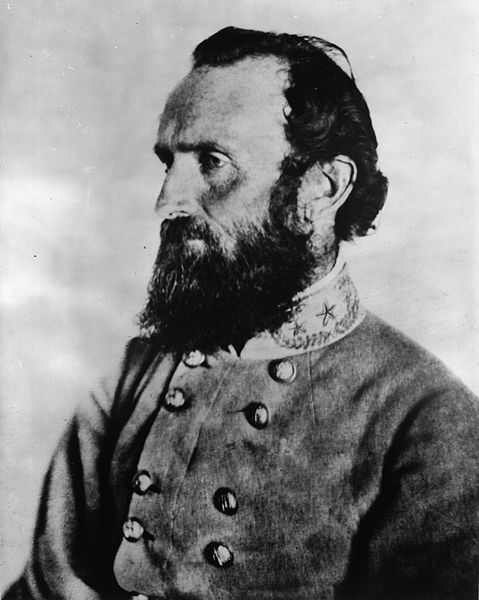
Two other well-publicized funerals, North and South, also raised awareness of embalming (and to some extent its limitations).  Confederate General “Stonewall” Jackson died on May 10, 1863 as a result of wounds from friendly fire at the Battle of Chancellorsville.  In Richmond, the Confederate capital, all business was suspended.  The Capitol was draped in black.  Jackson lay in state at the Governor’s mansion, brought there in a hearse led by two white horses.  He was embalmed and then moved to the Confederate House of Representatives where 20,000 people filed past paying their respects.  Then his body travelled to Lexington, Virginia where services continued prior to his interment.  By this time, however, decomposition had begun and his face was covered since the features were said “not to be natural.”
General "Stonewall" Jackson

Abraham Lincoln died from an assassin’s bullet on April 15, 1865.  His funeral was remarkable.  His body was embalmed and lay in state at the Capitol before making a national funeral procession by train through Baltimore, Harrisburg, Philadelphia, New York, Albany, Buffalo, Cleveland, Columbus, Indianapolis and Chicago before finally arriving in Springfield, Illinois on May 3rd.  

Lincoln's Coffin Displayed in Chicago
By this time, as Drew Gilpin Faust notes, “the shortcomings of contemporary embalming technology had become apparent…”  It was not unusual for an embalmer to advertise that bodies they embalmed “NEVER TURN BLACK!”

Lincoln's Funeral Procession Down Pennsylvania Avenue
After the war, many of the men who learned these trades returned to their homes and set up embalming and undertaking businesses, but acceptance of the practice took many years.

Check back later for more on the development of undertaking as a profession and the embalming empire of Dr. Cornelius in Nashville, Tennessee.

References:

Faust, Drew Gilpin.  This Republic of Suffering:  Death and the American Civil War.  New York: Alfred A. Knopf, 2008.

Habenstein, Robert W. and Lamb, William M.  The History of American Funeral Directing.  National Funeral Directors Association, 1981.

Laderman, Gary.  Rest in Peace:  A Cultural History of Death and the Funeral Home in Twentieth-Century America.  Oxford University Press, 2003.

Laderman, Gary.  The Sacred Remains:  American Attitudes Toward Death, 1799-1883.  New Haven:  Yale University Press, 1999.

Mitford, Jessica.  The American Way of Death.  New York: Simon & Schuster, 1963.

Walker, Juliet E.K. The History of Black Business in America: Capitalism, Race, Entrepreneurship.  The University of North Carolina Press, 2009.


Please also see Dr. Harlan's translation of J.N. Gannal's book and The American Cyclopaedia from 1875 has an entry on embalming.

Monday, August 8, 2011

Secret Swimming Holes

I have to thank my good neighbors here in Providence for passing along their secret swimming holes along the rocky Rhode Island coast.  Here are a few pics from one I went to the other day.  No, I can't tell you.  It's a secret!


Wednesday, August 3, 2011

Arts and Letters

I had the great pleasure of hearing my friend Stephen Desroches read last week.  He’s been picked up by a great new gallery in Provincetown, the A Gallery, run by Adam and Marian Peck (also of the Adam Peck Gallery in Provincetown’s West End).  Adam and Marian are supporting a great group of local artists and writers, bringing back the tradition of art galleries showcasing and publishing written works as well as visual arts.


Steve read a beautiful piece of literary non-fiction entitled "My God, My God, Why Have You Forsaken Me?", both very funny and very moving.  It was a packed house and his reading, as always, was beautifully done.  Congratulations, Steve!!  For those of you who missed it, do not fear.  You can get a chap-book style copy of the piece with photographs here.


In the story, Steve returns to his youth at a time when he was cast as Jesus in the Easter pageant at his church and when his family was dealing with his mother's breast cancer diagnosis.  The story is skillfully structured, managing the emotion without sentimentality and using a wicked sense of humor to balance the whole.  A pleasure to read and to hear.

While you are browsing the A Gallery, be sure to check out Chris Sousa’s work.  He is an artist who has lived in Ptown for many years and who is building a great career.  His work is exquisite and truly speaks for itself.  Beautiful figures, delineated musculature heightened by shadowy light, something compelling yet unsettling about the composition.  Definitely worth spending some time with him.


Both of these guys are worth watching and waiting for their next move!